NOTHING WASTED

  • Home
  • Our Systems
  • Science Behind Our System
  • Circular Context
  • About Us
    • Our Team
    • Contact
  • More
    • Home
    • Our Systems
    • Science Behind Our System
    • Circular Context
    • About Us
      • Our Team
      • Contact
  • Home
  • Our Systems
  • Science Behind Our System
  • Circular Context
  • About Us
    • Our Team
    • Contact

Waste-to-Resource

Waste-to-Resource Waste-to-Resource

From Linear Extraction to Circular Regeneration

Who We Are

Solving Waste Problems at the Source

We develop projects scaled to local waste challenges.


We build, operate, and maintain complete Waste-to-Resource systems — securing the organic feedstock, constructing the system on-site or nearby, and managing it for performance and reliability over the long term.


Our high-temperature process permanently destroys PFAS, microplastics, and other persistent pollutants, producing clean energy and stable, carbon-rich soils that support healthy ecosystems and communities.


Why It Matters

The Facts

  • 2 billion tonnes of organic waste are produced each year — projected to double by 2050 — overwhelming cities and communities that can least afford it.
  • 20 percent of global methane emissions come from decaying organic waste, driving climate impacts that hit agriculture and public health first.
  • PFAS and other persistent pollutants contaminate soil and water, accumulating in food systems and human bloodstreams.
  • The economic burden of mismanaged waste exceeds $250 billion a year, while the social costs — disease, lost productivity, and displacement — are far higher.

Waste As Raw Material

Waste is the raw material of our century — the inevitable result of an extractive way of living. By using waste as the foundation for clean energy, healthy soil, and resilient local economies, we move from extraction back to renewal.

Matter - Energy - Life

Closing The Loop

Our systems close loops that other renewables leave open:

Matter Loop
We capture organic waste that would otherwise be landfilled, burned, or left to decay. The feedstock becomes the input for clean energy and regenerative materials.

Energy Loop
We generate the power to run the process itself, with surplus electricity and gas used locally or supplied to the grid.

Life Loop
We return stable carbon and nutrients to the soil, improving fertility, retaining water, and restoring local ecosystems.

For The World We Share

  • Cleaner air and water — PFAS, microplastics, and other persistent pollutants are permanently destroyed.
  • Healthier soils — stable carbon and nutrients are returned to the ground, improving fertility and water retention.
  • Permanent carbon removal — carbon is locked in mineral and biochar form for millennia.
  • Lower emissions — methane and CO₂ releases are eliminated at the source.
  • Stronger local economies — waste becomes a resource that supports agriculture, energy, and jobs.

Waste → Conversion → Valuable Resources

One Journey in Focus: Wood Waste

When burned, 92–94% of this wood’s carbon goes straight into the air as CO₂, CO, and methane.

    Each system creates clean energy and regenerative products

    BioReactor Byproducts

    aH2​+bCO+cCO2​+dCH4​

    SYNGAS: A clean fuel mix of hydrogen, carbon monoxide, and methane. It powers generators, produces electricity and heat on-site, and reduces reliance on fossil gas.

    BioOILS

    Oils serve as heating fuels or blendstocks for diesel substitutes, displacing petroleum.

    BioCHAR

    Locks carbon in solid form. Applied to soil, it enhances water retention, improves nutrient efficiency, and stimulates microbial activity, while filtering pollutants and reducing fertilizer runoff. It can be used in construction materials or as an animal feed additive.

    Additionally, it can be processed into activated carbon and used in low-carbon concrete/asphalt, as well as applied in stormwater and industrial filtration.
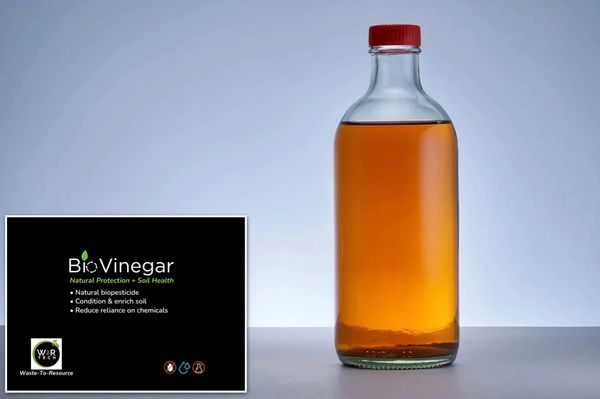
    BioVINEGAR

    A liquid byproduct with antibacterial and antifungal properties used in natural pesticides, soil conditioners, eco-friendly industrial cleaners, and food flavoring/preservation.

    BioSTIM

    A natural growth stimulant produced from organic fractions and infused into biochar. It boosts plant resilience, reduces dependence on chemical fertilizers, and supports healthier soils.

    Performance That Outlasts Policy

    A Policy Shift That Rewards Resilience

    The Post-Subsidy Reality

    While much of the world is expanding support for circular and carbon-negative technologies, the U.S. has moved in the opposite direction with the One Big Beautiful Bill, scaling back renewable subsidies and centralized programs.


    That shift underscores a broader global truth: the most durable climate infrastructure is that which performs under any policy—systems that: 

    • Make use of regional resources 
    • Create verifiable carbon removal
    • Deliver measurable local impact


    That’s exactly what W2RTech was built to do.

    Policy & Market Context

    Global Market Trends

    How We Compare to Other Renewables

    Integrated BioReactor System

    Our BioReactor systems generate clean power by processing waste, not creating it.

    Built from durable, recyclable components, our systems operate for decades, leaving little to no legacy waste behind.

    Solar & Wind

    Solar and wind have helped cut emissions — but they rely on materials and components that will soon become waste. Panels, blades, and batteries are already reaching the end of their life, with limited recycling options. 

    Millions of tonnes are piling up worldwide.

    The Next Waste Stream

    Solar

    • Steel, aluminum, copper, silver, and silicon
    • Lithium-ion batteries containing lithium, cobalt, and nickel
    • Panels and batteries last ~20–30 years
    • Only ~10% of panels are recycled
    • Framing and glass are piling up in landfills

    Wind

    • Steel towers, copper wiring, and rare earth magnets
    • Fiberglass blades with resin composites — extremely hard to recycle
    • Most decommissioned blades are cut up, buried, or stockpiled
    • Global blade waste is expected to grow exponentially through the 2030s

    We produce clean energy, not the next waste problem.

    Waste-To-Resource

    Copyright © 2025 W2R - All Rights Reserved.